Container quay at first light with gantry cranes and stacked boxes in ordered rows along the quay rail
Quay at first light, Belgium.

Antwerp · quay 869 · first light

Berths that hold, systems that ship.

Bluehaven is a Belgian software house at the seam between the quay and the server room — building the terminal, customs, telemetry and ERP systems that a port cannot afford to lose for a morning.

From quay to cabinet

Build, integrate, run — in one bench.

Most of our work passes through the same three rooms: a terminal where the process is, a wire room where the vendors meet, and a cold aisle where the software finally has to stay up.

Stacked container rows receding past a single gantry leg in pale overcast light

Terminal and yard software — the process a planner actually trusts

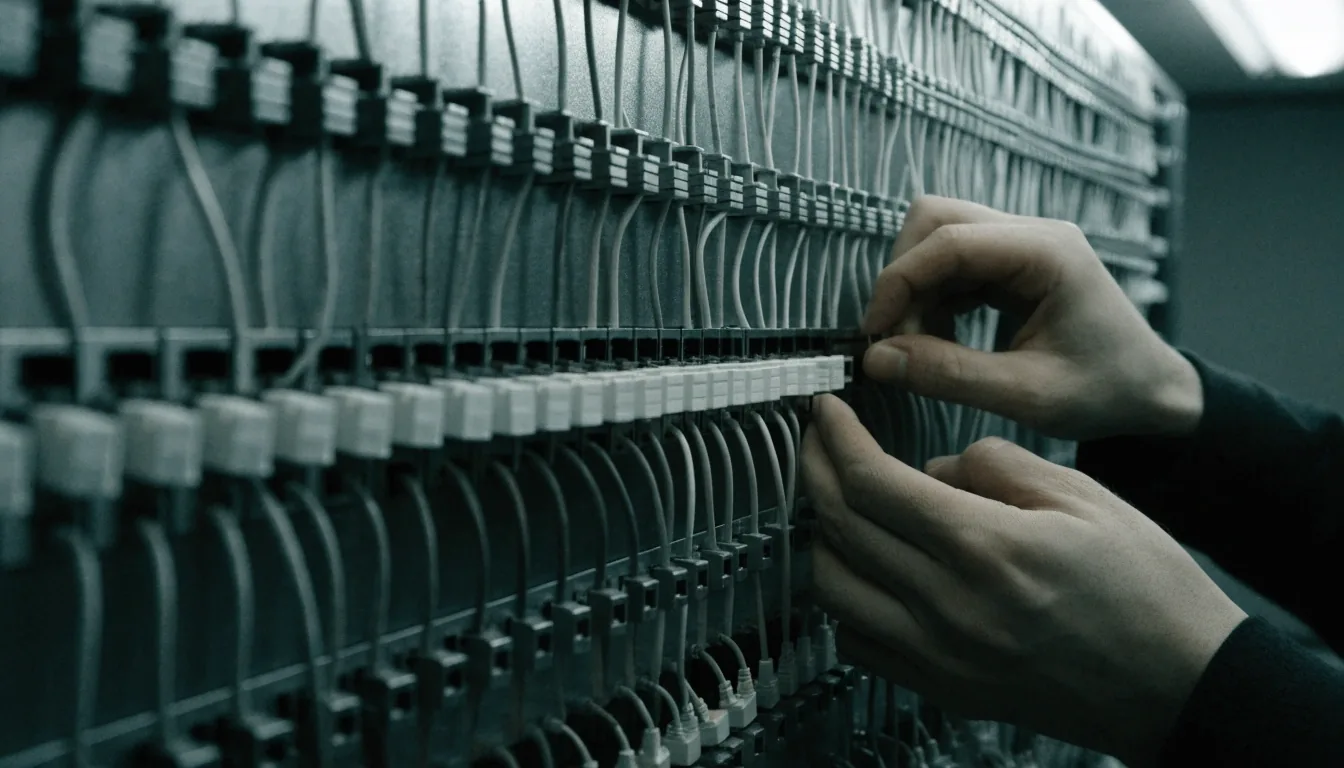
Hands patching a port into an ordered cable run on a matte steel wire-room panel

System integration — two vendors' products exchanging records without a human retyping

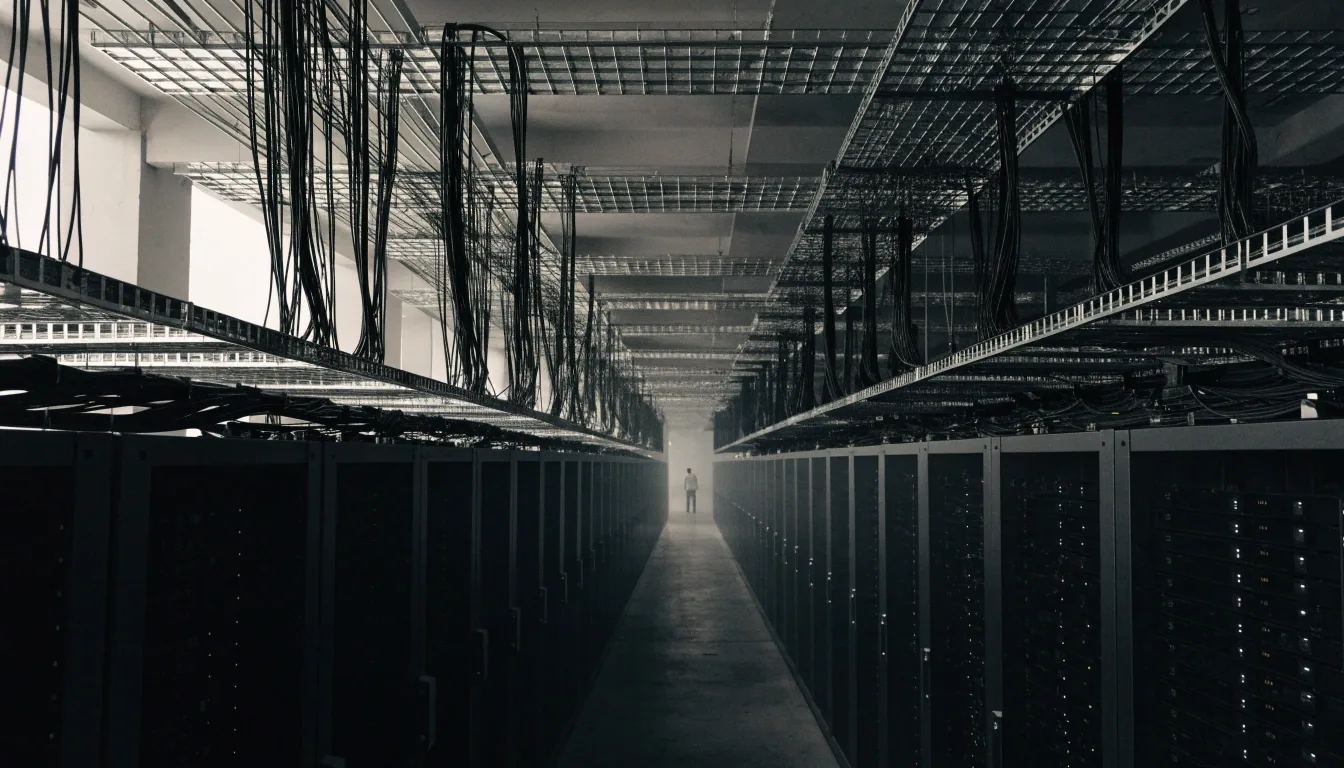
Datacentre aisle of cold cable trays receding past a distant human silhouette

Managed run — deployments, monitoring and support that survive a Monday morning

The bench, by trade

What we actually build.

Six trades sit on the bench. Most engagements touch two or three. Fixed-scope for a bounded deliverable, time-and-materials for ongoing development — we tell you which one fits before you ask.

Bluehaven service lines, with what each trade covers and the state it typically sits in.
Trade Build / Run
Custom software development Build
Cloud Build → Run
Data & AI Build
System integration Build → Run
ERP development Build → Run
Cybersecurity Run

How a project usually starts

A walk with five waypoints.

We begin with a short discovery phase that ends with a scoped backlog, an architecture sketch and a cost range you can take to your own management. From there work runs in two-week increments with a demo at the end of each, so progress is something you watch rather than something you are told about.

  1. 01

    Discover

    Two to four weeks on site in Antwerp or Ghent where it helps. We watch the process, talk to the people who actually use the system, and write down what we heard before proposing anything.

    Span · 2–4 weeks

  2. 02

    Scope

    A written definition of done for the first phase, small enough that you can judge it independently of the rest. Fixed-scope or time-and-materials, agreed in writing before we start.

    Deliverable · backlog + architecture sketch

  3. 03

    Build

    Two-week increments with a demo at the end of each. The team writing the code is the team that scoped it — no hand-off between the people who sold the work and the people who have to build it.

    Cadence · 2-week increments

  4. 04

    Migrate

    For modernisation, we run the old and the new side by side and move one workflow at a time. A rollback path stays open until the last workflow is across — slower on paper, faster in practice.

    Pattern · strangler, workflow by workflow

  5. 05

    Hand over

    Your IT team keeps ownership of the systems it knows best, we document as we go rather than at the end, and handover is a phase in the plan — not a farewell email.

    Exit · documented, yours to run

Quiet canal at pale morning with a moored barge along a low brick wall
Ghent · Ghent–Terneuzen canal · pale morning

Why maritime is a real specialism

A port is an unforgiving place to run software.

Windows for maintenance close when a vessel berths, not when a sprint ends. Customs and port-authority interfaces change format without much warning. Data arrives in EDI, in flat files, in an operator's web portal, and occasionally as a phone call.

Belgian operations add their own texture: Dutch, French and English in the same incident ticket, and rules that come from both national and EU level. Teams that have only built for a domestic retail chain tend to discover these constraints in week six. We try to have that conversation in week one.


The Belgian market we work in

Crowded market, different jobs.

Belgium's technology-services market is crowded, and it is useful for a buyer to know what each kind of vendor is actually selling. Four shapes usually show up at the table.

Large consulting groups

EY Belgium and Cognizant Belgium package digital transformation as strategy plus execution across a whole enterprise. They suit organisations restructuring at board level, where the question is what to change rather than build this.

Global integrators

Standardised delivery at scale, with all four of cloud, data, AI and cybersecurity at enterprise level. A sensible fit when breadth matters more than proximity to a specific port process.

Specialist boutiques

TECHI Solutions and Sigli (Antwerpen, with offices in Vilnius and London) compete on focus and speed in the custom-software rankings. DNA Solutions in Zaventem positions around enterprise app modernisation, AI and BI. EACHSTAPP, founded in 2022, shows how recently a Brussels boutique can enter the same field. We sit in this camp, with a maritime and industrial focus the generalists do not carry by default.

Connectivity-led providers

Orange Business Belgium approaches the same buyers from the network side, which fits companies whose first constraint is transport rather than the process running on top of it.

Where the work happens

Delivery capacity is not all in Brussels.

Antwerp

Where the port operators, freight forwarders and chemical clusters sit. A requirements workshop in Antwerp usually produces better answers than a video call.

Ghent

A genuine regional services hub with its own delivery capacity, transformation providers listing East Flanders addresses alongside their capital offices.

Brussels

The densest concentration of vendors, and where our own registered office sits at Rue de la Loi 155 — useful when a contract needs a Belgian address.

We work on site when a process needs to be watched rather than described, and remotely for the rest. For clients elsewhere in the Benelux, that usually means a mix: a few days at your location for discovery and acceptance, the rest of the build handled where the team works best.

The rest of the work

Data, security, and the IT team you already have.

Data and AI, without the hype

The useful questions are narrower than they sound. Which reports does someone rebuild by hand every month? Which numbers do two departments disagree about? Where does a planner make a judgement call a model could inform but not decide?

We start there, with the data you already have. Many projects stop at a clean warehouse and a dashboard, and that is a legitimate finish line. Others go further into forecasting or anomaly detection on vessel and equipment signals.

Security in a regulated environment

Port and logistics work touches customs data, personnel records and commercially sensitive schedules. Belgian and EU rules apply, and so do the security expectations of your customers.

In practice that means access control that reflects real job roles, audit trails on who changed what, encrypted transport, and a documented path for handling an incident. We build those in from the start rather than bolting them on. Where an existing security function is in place, we work inside your policies; where there is none, we will say plainly which gaps we can close and which need a specialist.

Working with your internal IT team

Most of our clients have an IT department, and the project is rarely the only thing on its plate. We plan around that.

Your team keeps ownership of the systems it knows best, we take the new build, and we document as we go rather than at the end. Where your people want to learn a stack, we pair with them instead of working around them. Handover is a phase in the plan, not a farewell email.

How we price and scope work

Fixed scope, or the long build.

Engagements are either fixed-scope for a defined deliverable or time-and-materials for ongoing development, and we will tell you which one fits before you ask.

Questions buyers ask first

Straight answers, in writing.

These are the questions we hear most from Belgian mid-market buyers comparing us to a consultancy, an integrator or another boutique.

What kind of software partner fits a Belgian mid-market company best?

It depends on whether your problem is strategic or operational. If you are restructuring how the whole business works, a large consultancy such as EY Belgium or Cognizant Belgium brings that breadth. If you need a specific system built, integrated or modernised, a specialist firm tends to move faster and cost less, because you are not paying for the strategy layer. Mid-market companies often end up with one of each, doing different jobs.

When does a business need a digital-transformation consultancy instead of a pure development shop?

When the question is what should we change rather than build this. Transformation consultancies work across business models, processes and systems at once. A development shop assumes the target is roughly known and executes against it. If your management team already agrees on the destination, you probably do not need the consultancy layer.

Which Belgian cities are strongest for software and IT services?

Brussels has the densest concentration of vendors. Antwerp is where maritime and logistics demand clusters, and Sigli and other development firms are based there. Ghent has become a real regional hub with its own delivery capacity, and Zaventem hosts firms such as DNA Solutions close to the airport. For a maritime project, proximity to Antwerp or Ghent is worth more than a Brussels postcode.

What services usually sit inside custom software development today?

More than code. A typical engagement includes requirements work, architecture, integration with existing systems, testing, deployment and some level of ongoing support. Data work often comes with it, and increasingly so does some AI component. Cybersecurity is usually a cross-cutting concern rather than a separate line item. If a vendor quotes you a build without those, ask where they sit.

How do Belgian firms compare cloud, data, AI and cybersecurity capabilities?

The large integrators have all four at enterprise scale. Specialists tend to be strong in one or two and partner for the rest. Orange Business Belgium approaches from connectivity and infrastructure; DNA Solutions leans on modernisation, AI and BI; others focus purely on custom builds. The practical question is not who has the longest list but who has done your specific combination before.

What should buyers check before hiring an external development team?

Who writes the code, where the source and documentation end up, and what a change request costs. Ask for a written definition of done for phase one. Ask to speak to a client whose project went badly, not only the happy ones. And confirm the commercial mechanism in writing: for most engagements that means invoicing against milestones or monthly, by bank transfer.

What we look for in a client

The projects that go well share a few traits.

  • Someone on your side has the authority to make a decision and the time to be in the room.
  • You can describe the current process, even if it is ugly.
  • You are willing to let us talk to the people who actually use the system, not only the ones who commissioned it.
  • You treat the first phase as a way to reduce risk rather than a formality.